


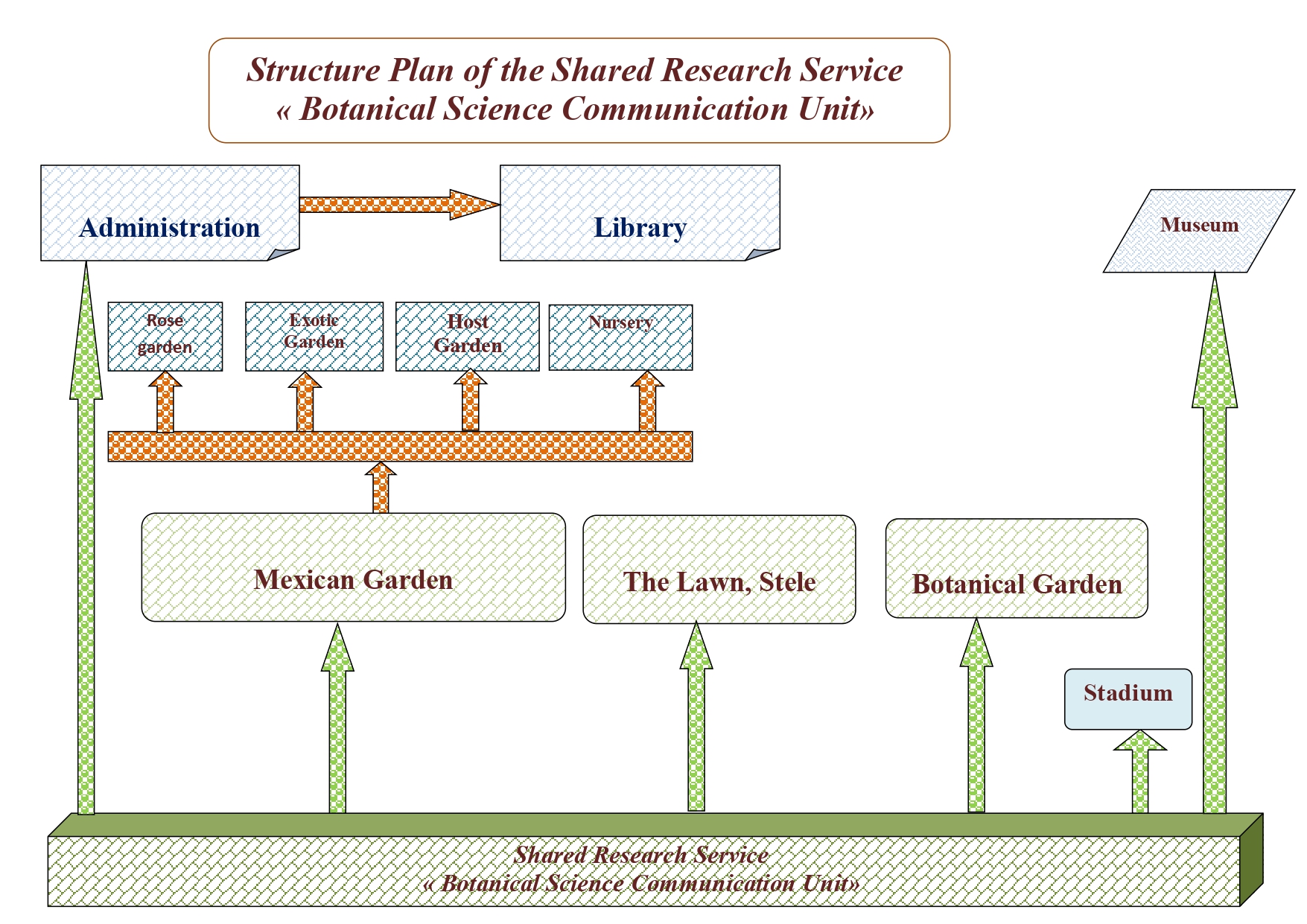
Shared Research Service
« Botanical Outreach Unit »
The University of 20 August 1955 of Skikda possesses a priceless botanical heritage, inherited from the former Higher Institute for Agricultural Technicians Training (IFTSA). This heritage includes specimens of century-old trees as well as diverse collections of plant forms, mainly distributed within gardens covering a total area of 3 hectares, 16 ares, and 87 centiares.
These gardens stand out due to the diversity of their styles, architecture, ornaments, and vegetation, bordered by hedges composed of Myoporum laetum and Ligustrum vulgare.
They constitute a true living museum, grouping plants, trees, shrubs, cacti, agaves, euphorbias, some of which have now disappeared, such as Callistemon citrinus splendens, magnolias, Pleomelodraco, Baccara roses, etc. Others are threatened with extinction, such as Calliandra haematocephala, Bauhinia, Psidium cattleyanum Sabine, viburnums, camellias, etc.
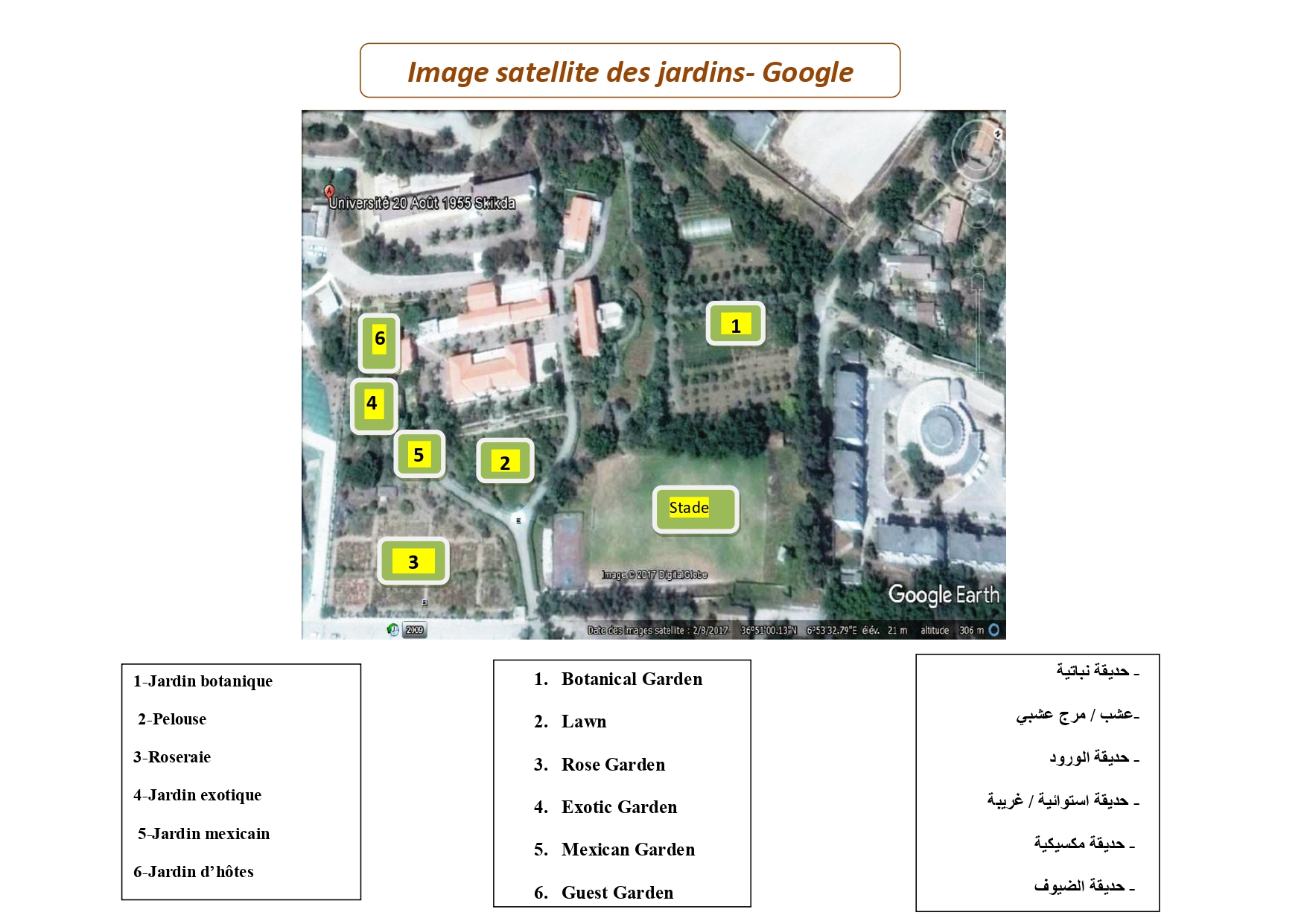
Some of these specimens are located in the botanical garden, which houses collections of conifers, palms, flowering trees, fruit-bearing or ornamental foliage trees, shrubs, and decorative sub-shrubs, as well as various fruit and flower species.
The lawn consists of flexible climbing plants that coil around supports, such as Pyrostegia venusta, Distictis buccinatoria, and Wisteria. There are also climbing shrubs like Hedera, Campsis chinensis, and Campsis radicans. Vining plants, such as Bougainvillea and Plumbago capensis, decorate the walls of buildings.
The rose garden is divided into geometric beds with arches and pergolas covered with climbing roses, Wisteria, and Lonicera. In the center, large-flowered bush roses harmoniously combine with Euonymus japonicus.
The upper part of the site houses the exotic and reception gardens, including tropical and subtropical species such as: Diospyros kaki, Eugenia jambolana, Eugenia uniflora, Musa cavendishii, Persea gratissima, Psidium cattleyanum Sabine, Litchi chinensis, etc.
Nearby, the Mexican garden presents collections of cacti, euphorbias, agaves, and aloes, bordered by ericaceous plants such as camellias, Hydrangea macrophylla, Erica arborea, etc.
These gardens require preservation measures through vegetative propagation and regular maintenance. They provide an ideal support for teaching, scientific research, and the creation of a phylogenetic bank.
A 400 m² polyethylene greenhouse has been installed, and the horticultural nursery was rehabilitated in August 1988. To date, 202 species have been identified, including several aromatic and medicinal plants used in phytotherapy, while 30 others are in the process of identification.
In this context, the introduction of new species such as mango, kiwi, or sapote is necessary to expand the varietal range. The propagation of certain tropical plants began in 2009 as part of the creation of a specific nursery.
- Hits: 111